

HISTORY
The presence of this large church on the Plains of Kansas is a lasting testimony to the faith and hard work of a people whose roots go deep into the soil of this farming community of Victoria.
The first settlers of this area were gentlemen farmers from England who arrived in 1872 with the intention of duplicating their aristocratic lives in spite of harsh weather and rough ground. They named their village, Victoria, in honor of their queen and laid out the streets according to the plan of London architect. They were joined in 1876 by a group of poor immigrants from southern Russia known as Volga-Germans, who were fleeing from service in the Czar's army and dangers to their Catholic faith.
Creating a village of sod-huts adjacent to Victoria, they named it Herzog, after their town in southern Russia on the Volga River. The British soon found pioneer life too extreme of a contrast with respect to the lifestyle they had known in England. They could not make the land adapt to them and they could not adapt to the demands of the land. In a few short years most returned home leaving the town's name as the only lasting memorial to their efforts now in the care of the Volga-German community. Hardened by their experience of a hundred years on the steppes of Russia, where they had first arrived at the invitation of Empress Catherine the Great in 1763; the Volga-Germans stayed to work with the land and make it their home.



THE FOUNDING SETTLERS OF HERZOG

April 8, 1876
The original founders of Herzog gathered at Saratov, Russia from the nine villages of Herzog, Boregard, Liebental, Obermonjour, Marienthal, Louis, New-Obermonjour, Marienburg, and Graf. They were Germans, living in the region of the Volga River in Russia, where their ancestors had migrated a century before at the invitation of Empress Catherine the Great. Unhappy with the Czar’s military prescription and fearful of the Russian attitude toward their Catholic and Lutheran faith, thousands left Russia in the late 1800’s, searching for farmland in Canada, Argentina, and the United States.
They left Saratov on October 24, 1875.
Sailing from Bremen, Germany, on November 2, 1875, they landed at Baltimore, Maryland, on November 23 following a rough 21-day sea voyage. Traveling by train, they arrived in Topeka on November 28, 1875. They were quartered for several days in the Kings Bridge Building until rental accommodations could be secured in north Topeka. During the winter of 1875–76, they worked out of Topeka at common labor, on the railroad, or for local farmers. Some of their leaders recommended land in the Hog Back vicinity in Ellis County, but this was rejected by the group. Eventually, they agreed on the site where Herzog was ultimately located. It was on April 8, 1876, that 23 families arrived in Ellis County, and alongside the British settlement of Victoria founded their own village of Herzog, named
after their home in Russia. The first dwellings were erected immediately after the April 8th arrival on the east bank of Big Creek, a short distance west of the present town.


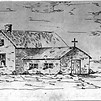
Their first place of worship was under an open sky, where they gathered around a large wooden cross erected in the center of the village to sing religious hymns, pray their rosaries, and implore God’s blessing on their lives in America. Within weeks of their arrival, Fr. Adolph Wibbert, a priest from Salina, visited them and celebrated Mass in the home of Alois (Aloysius) Dreiling. Priests continued to make periodic visits, and it was soon decided to attach a lean-to measuring 40 feet by 24 feet to the Dreiling home.
By the next year, plans were made and work was begun on a permanent church. Soft limestone was acquired from a quarry about eight miles to the northwest, near the village of Catherine. Funds were collected by the Honorable Walter Maxwell, a Catholic Englishman who lived in the neighboring village of Victoria. This second church, measuring 60 feet by 30 feet, was completed in 1877 and dedicated to the Sorrowful Mother. Assisting alongside Fr. Adolph was Fr. Valentine Sommereisen, a french missionary who had arrived in 1876, two years prior. During his time in Hays, Fr. Valentine founded the beginnings of these first and second churches while also serving these immigrant populations who had just arrived.
In 1878, Fr. Valentine Sommereisen was reassigned and had encouraged Bishop Fink of Leavenworth to send german-speaking priests. At the invitation of the Bishop, Capuchin Friars who had recently arrived from Bavaria, Germany and settled in Pittsburg, Pennsylvania would be given the task of ministering to the german-speaking immigrant settlements.
THE ARRIVAL OF THE CAPUCHIN FRIARS

In 1878, the Most Rev. Bishop Fink of Leavenworth, Kansas wrote to Rev. Father Hyacinth Epp, the Comissionary Provincial for the Capuchin Friars, to send him German-speaking priests. On January 31, 1878 both Bishop Fink and Fr. Hyacinth visited the Herzog community and the surrounding settlements. Bishop Fink asked the Capuchins to take on the spiritual task of caring for these newly arrived immigrants, and after some hesitation due to low numbers in the community had agreed.
The following is an English translation of the document sent to Fr. Hyacinth Epp, giving to the Capuchin Friars the task of caring for the german faithful.
“We Louis Maria Fink, O.S.B. by the grace of God and the Apostolic See, Bishop of Leavenworth, by these letters give to the Capuchin Fathers of the Pennsylvania Province of St. Augustine, situated in Victoria, Ellis County in our diocese that they may erect there a convent or monastery and church. Through the same letters we give charge over the faithful living now or in the future in Ellis county around (north) the river which is called Smoky Hill River according to time and necessity, according to ours and our successors directions. For their living is given whatever temporal means are available.”
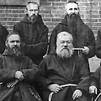
May 11, 1878 – The first Fathers that came were Rev. Father Matthew Hau, Superior, and Rev. Father Anathasius Muller. They arrived May 11, 1878. They found an unfinished church, one vestment for mass, one rough box which served as an altar and trunk in which the Blessed Sacrament was kept.
When the Fathers known as Friars arrived, they found a frame house which had been emptied for them, one table, two poor benches, one mattress filled with straw, no bed sheets or bed covers of any kind. But they had a good helper, a tertiary Joseph Thanner, whom they brought along from Pittsburgh, PA. There was plenty of work waiting for them. Their work was neither small nor easy. Until 1887 when the diocese of Leavenworth was divided, Victoria became part of Concordia dioceses with the following counties to take care: Ellis, Russell, Gove, Logan, Rush, Barton and Wallace a distance of 170 miles. They took care of the following stations: Hays, Catherine, Munjor, Pfeifer, Ellis, Schoenchen, Liebenthal, St. Theresa, Bunker Hill, Russell, Wallace and Collyer. In all these places mass was offered and the sacraments were given in private houses. On June 25, 1878 Father Matthew died, much beloved by the people and for his priestly work; the cause of death was Cholera. Father Joseph Callisanctius Meyerhoefer was sent as Superior on July 15, 1878.
THE CHURCH BUILDING

By the turn of the century the people found themselves in need of more space for community worship. Under the guidance of Father Jerome Mueller, OFM Capuchin, they decided to build a spacious and artistic church that would be a worthy house of God for present and future ages. To this end, the parish secured the services of one of the country's foremost church architects, John T. Comes of Pittsburg, Pa. His plans were then slightly modified by architect John Marshall of Topeka.
On July 3, 1904, the building of a new St. Fidelis Church was officially announced. It was to be constructed of native hard limestone that was in ample supply just south of the future site. Groundbreaking for the present church building was begun in November 1908 with Blanchard Construction Company of Topeka, Kansas, as the contractor with a bid of $49,375. However, the Blanchard company fell into litigation and declared bankruptcy. A new contract bid of $54,785 by E.F.A. Clark Construction Company of Topeka, Kansas, was accepted in June 1909. The biggest task confronting the Clark Construction Company was the large amount of stone needed to construct such a massive structure. It was judged necessary that each communicant 12 years and older be accessed the sum of $45 yearly, and each family deliver 6 wagon loads of stone to the building site. Many Large families, such as were characteristic of the early settlers, hauled as many as 70 to 80 wagon loads of stone. To fulfil their assessments it required a great sacrifice of time, labor and money.
They completed the construction in 1911. The exterior is constructed of native limestone, quarried seven miles south of Victoria. Large layers of rock, about eight inches thick, were cleared of top soil and then perforated by hand augers with holes eight to ten inches apart. Into these holes, wedges were inserted and tapped with a hammer until the rock sprang apart along the line of perforation. The stone was then loaded on wagons and hauled to the building site to be dressed by local masons, who prepared it in fifteen different ways.The massive Romanesque structure stands in the form of a cross, facing west with its majestic towers rising above and dominating the prairie landscape. On the façade above the rose window, a stone statue of its patron, St. Fidelis of Sigmaringen, keeps watch. The church is 220 feet long, 110 feet wide at the transepts, and 75 feet at the nave. Its ceiling is 44 feet above the ground and the towers rise 141 feet. The seating capacity of 1,100 made it, at the time of its dedication, the largest church west of the Mississippi.
THE CONSTRUCTION OF ST. FIDELIS BASILICA

Soon after it was announced that the new church was to be built work began in the quarries. Using scrapers and teams of horses the workers cleared large slabs of stone. The slabs were divided into various sizes by nature. The workers marked the slabs in various lengths and widths needed for the walls in the church. Holes were drilled in the rock ten to twelve inches apart along the lines marked, to a depth of about six inches. The holes were drilled with a hand brace and bit. The holes varied in diameter according to the size of the feathers and wedges used. A 5/8 to 11/16 inch bit was used. After the holes were drilled feathers up and down the row until sufficient pressure caused the stone to split. Drilling of the holes in a kneeling position and using the chest apply pressure on the brace and bit to drill the holes caused the chest to become rather sore and painful. In a joking manner some said that the skin on their chest became so thick that they did not feel the pressure applied to the brace and bit. No doubt someone in the settlement conceived the idea of making feathers and wedges to split rock. A drawing and descriptions of the feathers and wedges used then are shown to better understand their use.
Near the Community of Vincent, Kansas, rock formations found about three feet under ground along the south banks of Big Creek seven miles south of Victoria are believed to be the finest and richest sources of limestone. Most of the rock for the church came from the Moritz Baier and Lorenz Braun farms located in Section 8, the Andrew and Adam Riedel farms in Section 7, and the Bernard Huser farm in Section 5, all in Township 15, South, Range 16, West.
The wedges were made of hard iron shaped by a black smith. The feathers were either made of half round steel rods or shaped by hand. They measured about 5/8 inch at the bottom and half the thickness tapered to the top with the end turned out at a 90 degree angle to prevent them from falling in the drilled hole and to remove them after the rock was split. Any number of feathers and wedges could be set depending on the length of the rock. After they were set each wedge was tapped with a hammer up and down the line until enough pressure was created to split the rock.
Many of the families worked in a group to meet their quota of rock. Early in the morning they could be seen going to the quarries with their horses, wagons, tools and lunch pails. They quarried the stone and loaded their wagons ready for delivery. In several months time a large quantity of stone were at the site to be dressed. Dressing of the stone began on January 11, 1905.
The dressing of the stone was done mainly by members of the parish who had learned this art and had become professional in this work. It was all handwork. No mechanical tools were as of yet available. The masons used special handmade stone hammers, each weighing from five to eight pounds. On one end of the hammer were cutting teeth and the other end of the hammer had a rectangular shaped head with sharp cutting edges used to knock off unwanted parts of stone. Tooth chisels, mallets, and bush hammers were used to square the ends of stones that would be used for door and window jams. A pitching tool about seven inches long with one end flattened out to a three inch width and the edge with a beveled edge was used to pitch face the wall rock, the final operation on the stone ready for walling. The stone used for the water tables and buttresses were split to specifications and dressed with a smooth waterfall finish. All the various arch stones were like wise split to specifications and when dressed to a wedge shape became self-supporting. The arch stones are the full width of the walls. This demanded accurate work. There are 18 or 20 different types of dressed stone in the building. A mason could dress a number lineal feet of wall rock a day, however the special dressed stone consumed much time. The stones weighed from 50 to several hundred pounds each. It was hard work and very strenuous on the masons back. After the stones were dressed, they were stacked in piles according to the width, thickness, length, and shape for easy selection when needed. Local Stone (material) 135,000 cubic feet, approximately 3000 wagon loads, cost $10,000. Masonry work $13,000. Cutting $7,500.
Before the dismantling of the old church began, which stood on the same location where the present church stands, a temporary building was erected in which church services were held until the new church was completed. Storage space for much of the furnishings had to be provided. This building stood east of the present grade school. In March 1909, the dismantling of the old church began. All the stone in the old church that could be used for the inner walls were salvaged. The debris had to be loaded on wagons and hauled away to clear the space for the new church. The sum of $500 was spent in the dismantling process.
THE ARRIVAL OF THE SISTERS OF ST. AGNES
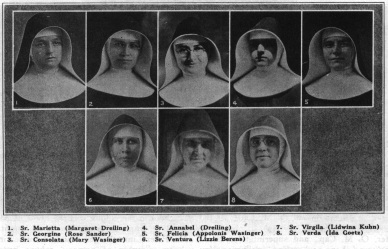
Realizing the necessity and the importance of a good Catholic education, the Pastor was most anxious to get Sisters for a Catholic school. On August 29, 1879, two Sisters, Sister Agatha and Sister Aurea of the Congregation of St. Agnes from Fond du Lac, Wisconsin, came to Herzog to share the poverty of these people and to teach their children. The parochial school in Ellis County opened in Herzog in September 1879. The church built by Hon. W. C. Maxwell served well the double purpose of church and school. Here the Sisters not only devoted their time to teaching religion and academic subjects but also the practical things of life as well.
Progress was slow; attendance at times irregular and the fee of 50 cents per month per child was quite a burden for many to pay. Children knew they came to school to study, not to play. Strict discipline prevailed in school. Both English and German were taught in school and so was religion. In church, the Mass was said in Latin. Sermons, songs and congregational prayers in German. German was the language spoken in the homes of this German settlement.
The Sisters dwelt for a time in the Alois Dreiling house. When the new monastery was completed, the Sisters then lived in the old monastery. In 1888, the Pastor Father Anselm Beyerau, O.F.M.Cap. built a large four-room school which measured 66 x 30 x 23 feet northeast of the school; a home for the Sisters 36 x 26 x 18 feet was built. The Maxwells again contributed toward the building of this school and Sisters home.
The Sisters of St. Agnes continued to minister to this parish until the summer of 1989.
RESTORATION PROJECTS
Beginning in 1994, the Pastoral and Finance Councils of the church took on a $265,000 repair and restoration project. Working closely with Wayne Brungardt (a native son of the parish) of Stecklein and Brungardt, Architects of Hays, the councils moved quickly to weatherproof the exterior, re-plaster and paint the interior, and update the sound, electrical and heating systems. All due care to respect the historical integrity of the structure was a priority.
It is worth noting that Tim Linenberger of Linenberger Painting of Salina was selected for the painting of the interior. He is the third generation of Linenbergers (originally from Victoria) to have painted the church for the fourth time in the past 80 years.
The colors chosen for this most recent painting return the church to the original rich mauve, or rose, and gold tones. The stenciling comes from a book published at the time the church was built and each one is hand painted. The colors in the stenciling pick up on come of the colors to be found in the stained glass windows. The ribs in the upper ceiling and the lower ceilings are painted in darker tones to visually accent the majestic heights of the Romanesque structure.
The 1994 repair project was followed by others. New carpeting and linoleum was laid in the body of the church in the Fall of 2004. By Spring of 2005, a new heating/boiler system was installed at a cost of $169,500. Around the same time, $60,000 was collected to lay a marble floor in the sanctuary and on the steps leading up to the sanctuary. With those items complete, plans for remodeling the entryways began in April 2005 and were completed in May 2006 at a cost of $50,000. The west entryway's floor and ceiling were torn out and redone. The bathrooms were also updated as well as the gathering/bridal room. The north entryway got a fresh coat of paint and a new floor.
The church roof was re-shingled in 2005 at an expense of $137,000; however, High Plains Roofing of Hays, Kansas, was hired to replace the inferior and improperly installed shingles during July and August of 2009. After much discussion, planning, and fundraising, an air conditioning system was installed by Glassman Corporation of Hays, Kansas, and was up and running by May of 2008. Once again parishioner and tourist contributions made this $357,000 project possible.
During the first week of March 2009, the sound system was once again updated, this time by MSM Systems, Inc. out of Lawrence, Kansas. Two 6' speakers attached to the pillars in the sanctuary replaced the need for most of the small white speakers that hung from every pillar in the church.
Starting in March 2011, J Corp of Hays, Kansas, replaced the north parking lot with cement, as well as replacing the west plaza cement. The project was completed in June 2011, just in time for the August 2011 celebration of the 100th anniversary of the construction and dedication of the current St. Fidelis Church. Verlin Hammerschmidt of Victoria remodeled a confessional in the south transept at the front of the church. It was redesigned to diocesan standards and resembles a small chapel. McCarter Painting of Victoria textured and painted the confessional.
Several times from 2012 to 2018, McCarter Painting has plastered and painted cracks in the ceiling and walls of the church. This seems to be a never-ending project. In August of 2013, Wildenborg Stained Glass Restoration, Inc., of Rogers Arkansas, removed the old yellowed Lexan polycarbonate panels that covered the stained glass windows of the church. They installed new clear tempered glass, often referred to as safety glass, that is five times stronger than standard glass which is not supposed to yellow. An "Adopt-a-Window" program was begun, with the cost for the new coverings ranging from around $3,760 for the larger windows to $1,467 for smaller windows. The covering for the rose window in the choir loft was priced at $13,412. The total cost was $155,202.
THE FOUNDING SETTLERS OF HERZOG
Established on April 8, 1876, Herzog became the largest of the Volga-German colonies in Ellis County. Situated in the Southeast Quarter of Section 1, Township 14, Range 17, one-half mile north of the English colony of Victoria. The following founders are known to made this journey:
Founding Individuals and Families (1876)
-
Arnhold, Freiderich
-
Arnhold, Jakob and Eva Hoffman Arnhold
-
Arnhold, Katharina Margaretha Faller Arnhold
-
Arnhold, Philip and Katharina Dreiling Arnhold
-
Billinger, Andreas and Magdalena Scheck Billinger
-
Braun, Johannes Peter and Anna Martha Weber Braun
-
Braun, Joseph and Katharina (Elizabetha) Braun
-
Dreiling, Alois and Katharina Rohleder Dreiling
-
Dreiling, Anton and Maria Elizabetha Rupp Dreiling
-
Dreiling, Nikolas and Katharina Wahl Dreiling
-
Dreiling, Nikolas and Margaretha Seib Dreiling
-
Dreiling, Peter N. and Elizabetha Richmeier Dreiling
-
Geist, Christina (Anna Maria) Geist
-
Geist, Johann Jakob and Anna Maria Bieker Geist
-
Geist, Johannes and Katharina Gerber Geist
-
Geist, Wilhelm and Katharina Elizabetha Meis Geist
-
Goetz, Andreas and Anna Bollig Goetz
-
Goetz, Johann and Anna Maria Mermis Goetz
-
Herman, Anton and Elizabetha Dreiling Herman
-
Kreutzer, Johannes and Katharina Asselborn Kreutzer
-
Lang, Jakob and Susanna Urban Lang
-
Quint, Peter and Margaretha Gerber Quint
-
Rome, Michael and Anna Schreiner Rome
-
Sander, Andreas and Katharina Knoll Sander
-
Sander, J. Adam and Elizabetha Lauber Sander
-
Sander, Johannes Peter and Anna Katharina Brungardt Sander
-
Storm, Michael, Jr. and Eva Knaub Storm
-
Storm, Michael, Sr. and Elizabetha Ries Storm
-
Stroemel, Joseph and Barbara Urban Stroemel
-
Vonfeldt, Ignatz
-
Weber, Anton and Anna Maria Gerber Weber
-
Weber, Franz and Anna Barbara Mueller Weber
-
Weigel, Andreas
-
Weigel, Ignatz and Elizabetha Sander Weigel
-
Weigel, Johannes Anton Weigel
The Second Migration (1876)
The friends and relatives who had remained in Russia were impressed by reports from Kansas. On July 8, 1876, the largest single expedition to leave for the colonies departed from Saratov. Within this group were 108 families for whom Balthasar Brungardt had undertaken to secure emigration passes. This contingent sailed on the “Mosel,” landed in New York, and arrived in Victoria on August 3, 1876. Among the 108, each family was influential in the establishment of these local communities and what we know today as St. Fidelis Basilica.
Braun & Brungardt Families
-
Peter Braun
-
Peter Andreas Braun & Katharina Margaretha — Maria
-
Andreas Brungardt & Magdalena — Andreas, Johannes, Margaretha, Katharina, Michael, Joseph
-
Balthasar Brungardt & Katharina — Franz, Alexander, Michael
-
Franz Brungardt & Eva — Margaretha, Andreas, Monika, Barbara, Johannes, Katharina, Anna
-
Franz Brungardt, Sr. & Anna Maria
-
John Peter Brungardt
-
Peter Brungardt & Barbara — Peter, Anna Maria, Andreas, Katharina, Margaretha
-
Peter Brungardt (Dobler) & Katharina — Margaretha, Andreas, Anton, Peter, Michael, Balthasar, Franz
Denning & Dinkel Families
-
Alois Denning & Theresia — Alois, Anna, Katharina, Christina, Maria
-
Elizabetha Denning (mother)
-
-
Michael Denning & Anna Maria — Joseph, Jakob, Barbara, Margaretha, Katharina, Barbara
-
Andreas Dinkel
-
George Dinkel & Margaretha — Elizabetha, Peter
-
Johannes Peter Dinkel & Katharina — Eva, Johannes, Peter
Dreiling Families
-
Anton M. Dreiling & Anna Maria — Anna Barbara, Rosa, Peter
-
Elizabetha Dreiling
-
Franz M. Dreiling & Maria Anna — Katharina, Anton
-
Michael Dreiling, Sr. & Margaretha — Johannes
-
Michael M. Dreiling & Barbara — Michael, Balthasar
-
Paulina Dreiling
-
Peter M. Dreiling & Susanna — Paulina
Frank, Knoll & Kapp Famiies
-
John & Marianna Frank
-
Joseph Kapp
-
Adam & Katharina Knoll — Michael, Johannes, Johannes Peter, Peter
Kuhn Families
-
Andreas Kuhn & Anna Katharina — Andreas, Anna Katharina
-
Johannes Kuhn Sr. (widower)
-
Johannes Kuhn & Barbara
-
Michael Kuhn & Susanna — Anna Barbara, Johannes, Jakob, Michael, Agnes, Katharina, Anna, Barbara
-
Michael Kuhn, Sr. & Elizabetha — Magdalena, Johannes
-
Michael M. Kuhn & Margaretha — Agnes
-
Peter Kuhn & Magdalena — Peter (Later Arrival, December 1877)
Mermis Family
-
Anton & Elizabetha Mermis — Anton, Peter, Franz, Konrad
Pfeifer Families
-
Andreas & Barbara Pfeifer
-
Johannes & Susanna Pfeifer — Johannes, Maria, Elizabetha
-
Michael Pfeifer Sr. & Theresia — Michael, Anna Katharina, Adam, Paulina
Riedel Families
-
Adam Riedel & Anna Maria — Agnes, Anna
-
Andreas Riedel & Christina — Anna Maria, Johannes, Adam
-
Martin Riedel & Magdalena — Johannes, Peter, Amalia, Agatha
-
Michael Riedel & Anna Maria — Andreas
-
Michael Riedel & Theresia — Andreas
Rome & Sander Familes
-
Peter & Katharina Rome — Eva
-
Sander, Ignatz & Margaretha — Anna, Katharina, Joseph, Anton; Magdalena Sander (Mother)
Schamber & Scheck Families
-
Friederich & Katharina Schamber — Peter, Christina, Anna Maria
-
Andreas, Jr. & Katharina Scheck — Peter, Katharina, Joseph, Franciska, Andreas, Anna
-
Andreas, Sr. & Elizabetha Scheck — Johannes
Schmidtberger & Vonfeldt Families
-
Schmidtberger, Michael
-
Andreas & Elizabetha Vonfeldt
-
Johannes Vonfeldt — Peter, Margaretha, Christian, Johnnes
-
Joseph & Katharina Vonfeldt — Anna Maria, Anna
Wasinger & Weigel Families
-
Wasinger, Johannes & Katharina Wasinger — Johannes, Stanislaus, Franz, Peter, Joseph
-
Michael & Katharina Weigel — Johannes, Peter, Michael, Valentine, Barbara, Peter Andreas, Joseph, Katharina
Windholz & Wittman Families
-
Windholz, Johannes (Single)
-
Wittman, Johannes & Anna — Anna Katharina, Alexander, Andreas, Johannes, Michael
-
Wittman, Peter & Katharina — Anna
Younger (Junker)
-
Younger (Junker), Martin & Margaretha — Johannes, Johannes, Michael, Joseph, Katharina, Anna
-
Younger (Junker), Peter — Johannes, Peter, Margaretha
Additional Groups by Village
From Obermonjour
-
Johannes Leiker & Elizabetha — Adolf, Katharina, Pius, Michael, Rosa
-
Anton Rupp & Maria — Alexander, Joseph, Caecilia, Maria, Anna, Rosa
-
Jakob Rupp & Margaretha — Margaretha, Anna Maria
-
Kaspar Rupp & Margaretha — Kaspar, Michael, Agnes
-
Margaretha Rupp (mother)
From Louis
-
Joseph Graf, Sr. & Anna Maria — Joseph, Peter
-
Martin Quint & Margaretha — Margaretha, Martin, Franz, Johannes Michael, Peter
-
Michael Quint & Franciska — Aloysius, Margaretha, Anna Barbara, Katharina, Veronica, Rosa
From Graf
-
Heinrich Gerber (single)
Later Arrivals
Before Christmas in 1877, three new families arrived in Herzog from Russia. In July, the following year, the Jakob Lang arrived with his family from Kamenka to settle in Herzog.
December, 1877
-
Peter Kuhn & Magdalena — Peter
-
Peter Linenberger & Anna Maria
-
Joseph Schmidtberger & Elizabetha
June 20, 1878
-
Jakob Lang Sr family (from Kamenka)
The Final Major Migration (September 15, 1878)
Led by Joseph Linenberger, the last major group to emigrate from Russia for settlement in Herzog arrived in Victoria on September 15, 1878. This group consisted of the following families:
-
Billinger, Johannes & Magdalena
-
Goetz, Andreas & Magdalena — Andreas, Joseph
-
Hausen, Henry — (2 in family)
-
Kuhn, Peter & Gertrude — Michael, Nicholaus, Amalia, Anton, Margaretha
-
Linenberger, Andreas & Margaretha
-
Linenberger, Joseph & Margaretha — Johannes, Maria, Peter, Katharina, Joseph, Gertrude
-
Pfeifer, Johannes & Anna Margaretha — Elizabetha, Adam, Margaretha, Katharina, Barbara, Andreas
-
Pfeifer, Johannes & Anna Maria — Johannes
-
Vonfeldt, Michael — (2 in family)
-
Weigel, Valentine — (8 in family)
-
Windholz, Johannes — (12 in family)
Additional immigrants continued to settle in Herzog until the beginning of the First World War but in individually or in small groups.
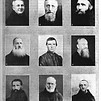
CAPUCHIN PASTORS AT ST. FIDELIS
1876 – Rev. Adolf Willbert
Rev. Valentine Sommereisen
1878 – Rev. Matthew Hau, O.F.M.Cap.
Rev. Jos. Cal Mayershoefer, O.F.M.Cap.
1881 – Rev. Anthony Schuermann, O.F.M.Cap
1885 – Rev. James Muench, O.F.M.Cap.
1887 – Rev. Anselm Bayerau, O.F.M.Cap.
1889 – Rev. Gabriel Spaeth, O.F.M.Cap.
1891 – Rev. Matthew Savelsberg, O.F.M.Cap.
1894 – Rev. Gabriel Spaeth, O.F.M.Cap.
1900 – Rev. Leo Egger, O.F.M.Cap.
1903 – Rev. Chilian Lutz, O.F.M.Cap.
1906 – Rev. Jerome Mueller, O.F.M.Cap.
1912 – Rev. Leo Egger, O.F.M.Cap.
1915 – Rev. Jerome Mueller, O.F.M.Cap.
1918 – Rev. Henry Kluepfer, O.F.M.Cap.
1921 – Rev. Placidus Wolker, O.F.M.Cap.
1923 – Rev. Cassian Hartl, O.F.M.Cap.
1927 – Rev. George Karlin, O.F.M.Cap.
1929 – Rev. Justin Walz, O.F.M.Cap.
1930 – Rev. Simon Knupfer, O.F.M.Cap.
1936 – Rev. Ildephonse Roeckl, O.F.M.Cap.
1939 – Rev. Alban Hammel, O.F.M.Cap.
1940 – Rev. Irenaeus Reinl, O.F.M.Cap.
1941 – Rev. Raphael Engel, O.F.M.Cap.
1947 – Rev. Irenaeus Reinl, O.F.M.Cap.
1954 – Rev. Robert Meis, O.F.M.Cap.
1955 – Rev. Ernest Horning, O.F.M.Cap.
1960 – Rev. Fabian Kekich, O.F.M.Cap.
1966 – Rev. Hugh L.Rauwolf, O.F.M.Cap.
1968 – Rev. Paulinus I. Karlin, O.F.M.Cap.
1970 – Rev. Neal Mahaffey, O.F.M.Cap.
1971 – Rev. Felix R. Petrovsky, O.F.M.Cap.
1978 – Rev. Michael Scully, O.F.M.Cap.
1981 – Rev. Gene Emrisek, O.F.M.Cap.
1983 – Rev. Gilmary Tallman, O.F.M.Cap.
1986 – Rev. Gene Emrisek, O.F.M.Cap.
1991 – Rev. Earl Befort, O.F.M.Cap.
1991 – Rev. Gregory Beyer, O.F.M.Cap.
1992 – Rev. David Gottschalk, O.F.M.Cap.
1993 – Rev. Frank X. Grinko, O.F.M.Cap.
2001 – Rev. David Gottschalk, O.F.M.Cap.
2001 – Rev. Maris Goetz, O.F.M.Cap.
2004 – Rev. Charles Polifa, O.F.M.Cap.
2007 – Rev. Michael Scully, O.F.M.Cap.
2011 – Rev. Jeffrey A. Ernst, O.F.M.Cap.
2013 – Rev. John Schmeidler, O.F.M.Cap.
2020 – Rev. James Moster, O.F.M. Cap..
2025 – Rev. Curtis Carlson, OFM Cap
CAPUCHIN ASSOCIATES
1878 – Rev. Anastasius Mueller, O.F.M Cap.
1880 – Rev. Anthony Berger, O.F.M. Cap.
1883 – Rev. Anastasius Mueller, O.F.M. Cap.
Rev. Andrew Eusenhut, O.F.M. Cap.
1884 – Rev. Maurus Strobel, O.F.M. Cap.
Rev. Anastasius Mueller, O.F.M. Cap.
Rev. James Muench, O.F.M. Cap.
1885 – Rev. Maurus Strobel, O.F.M. Cap.
Rev. Martin Muelders, O.F. M.Cap.
Rev. Francis Charles Strobel, O.M.Cap.
1886 – Rev. Maurus Strobel, OFM Cap.
Rev. Anastasius Mueller, OFM Cap.
Rev. Matthew Savelsberg, OFM Cap.
1888 – Rev. Anthony Berger, OFM Cap.,
Rev. Matthew Savelsberg, OFM Cap.
1890 – Rev. Maurus Strobel, OFM Cap.,
Rev. Anthony Berger, OFM Cap.
Rev. Martin Muelders, OFM Cap.
1891 – Rev. Maurus Strobel, OFM Cap.,
Rev. Martin Muelders, OFM Cap.,
Rev. Albert Andlauer, OFM Cap.
1892 – Rev. Maurus Strobel, OFM Cap.,
Rev. Emmeram Kausler, OFM Cap.
1893 – Rev. Anthony Berger, OFM Cap.
1896 – Rev. Emmeram Kausler, OFM Cap.
1897 – Rev. Clement Pfeifer, OFM Cap.
Rev. Joseph Leonissa Trageser, OFM Cap.
1898 – Rev. Jerome Mueller, OFM Cap.
1899 – Rev. Clement Pfeifer, OFM Cap.
1901 – Rev. James Steppe, OFM Cap.
1903 – Rev. Celestine Oswald, OFM Cap.
1904 – Rev. Anthony Burkhart, OFM Cap.
Rev. Titus Rumpelhardt, OFM Cap.
1905 – Rev. Anthony Burkhart, OFM Cap.
Rev. Vincent Brandt, OFM Cap.
1906 – Rev. Bernardine Kuhlman, OFM Cap.
1907 – Rev. Vincent Brandt, OFM Cap.
1909 – Rev. Titus Rumpelhardt, OFM Cap.
1910 – Rev. Pancratius Dockler, OFM Cap.
1911 – Rev. Ulric Zeller, OFM Cap.
1912 – Rev. Martin Fuchs, OFM Cap.
1913 – Rev. Richard Die, OFM Cap.
Rev. Martin Fuchs, OFM Cap.
1914 – Rev. Matthew Savelsberg, OFM Cap.
Rev. Anthony Burkhart, OFM Cap.
1915 – Rev. Pancratius Dockler, OFM Cap.
Rev. Victor Schiele, OFM Cap.
1921 – Rev. Mark Haas, OFM Cap.
1923 – Rev. Jordan Hammel, OFM Cap.
1925 – Rev. Raphael Engel, OFM Cap.
1927 – Rev. Edward Heyl, OFM Cap.
Rev. Raphael Engel, OFM Cap.
1928 – Rev. Raphael Engel, OFM Cap.
1929 – Rev. Herman Joseph Leiker, OFM Cap.
1933 – Rev. Justus Mueller, OFM Cap.
1934 – Rev. Casimir Debef, OFM Cap.
1936 – Rev. Flavian Meis, OFM Cap.
1938 – Rev. Irenaeus Reinl, OFM Cap.
1940 – Rev. Andrew Hermann, OFM Cap.
1942 – Rev. Edward Stoehr, OFM Cap.
1943 – Rev. George Karlin, OFM Cap.
1944 – Rev. George Karlin, OFM Cap.
1946 – Rev. Casimir Debef, OFM Cap.
1947 – Rev. Leander Yoest, OFM Cap.
1949 – Rev. Gabriel Giles, OFM Cap.
1951 – Rev. Vincent Langguth, OFM Cap.
1953 – Rev. Robert Meis, OFM Cap.
1954 – Rev. Thomas Vohsing, OFM Cap.
1955 – Rev. Robert Meis, OFM Cap.
1962 – Rev. John Francis Jackson, OFM Cap.
1964 – Rev. Marion (Donald) Gross, OFM Cap.
1969 – Rev. Fidelis McManus, OFM Cap.
1971 – Rev. Fidelis McManus, OFM Cap.
1974 – Rev. Justin Der, OFM Cap.
1976 – Rev. Regis Scanlon, OFM Cap.
1978 – Rev. John Lager, OFM Cap. (Deacon)
1979 – Rev. John Lager, OFM Cap.
1980 – Frank Grinko, OFM Cap. (Deacon)
1981 – Lloyd Schmeidler, OFM Cap. (Deacon)
1983 – Clement Naef, OFM Cap.
SISTERS OF ST. AGNES
Sisters who served at St. Fidelis:
1879- Sister Agatha Beschta
1879- Sister Aurea Sellner
1880- Sister Constantia Hochhaus
1880- Sister Marina Mueller
1880- Sister Pudentiana Baier
1880- Sister Agatha
1893- Sister Rosa Recker
1893- Sister Thecla Reindl
1893- Sister Salomea Darnieder
1893- Sister Adriana Henze
1893- Sister Andrea Forstner
Next several years unknown.
1913-14 Sister Cosma
1913-14 Sister Alfreda
1913-14 Sister Leona
1913-14 Sister Caroline
1913-14 Sister Celestine
1913-14 Sister Beatrice
1913-14 Sister Severine
1913-14 Sister Hortulana
1913-14 Sister Baptista
1914-15 Sister Cosma
1914-15 Sister Laurinda
1914-15 Sister Leona
1914-15 Sister Caroline
1914-15 Sister Celestine
1914-15 Sister Severine
1914-15 Sister Beatrice
1914-15 Sister Hortunana
1914-15 Sister Ursula
1915-16 Sister Flora
1915-16 Sister Leona
1915-16 Sister Laurinda
1915-16 Sister Caroline
1915-16 Sister Clarissa
1915-16 Sister Beatrice
1915-16 Sister Severine
1915-16 Sister Hortunana
1915-16 Sister Matilda Meier
1916-17 Sister Juliana Ries
1916-17 Sister Laurinda
1916-17 Sister Hilda
1916-17 Sister Clarissa
1916-17 Sister Beatrice
1916-17 Sister Appolinaris
1916-17 Sister Aquina
1916-17 Sister Rosaline Ruder
1917-19 Sister Henrica Huttner
1917-25 Sister Lucida Vorndran
1918-33 Sister Georgia Schrenk
1918-20 Sister Carissa Seidel
1921-26 Sister Delphine Herter
1922-23 Sister DeLourdes Foy
1924-25 Sister Mary Willaim
1925-39 Sister Concordia Ribacek
1925-26 Sister Leocadia Berger
1927-32 Sister Peter Claver Schirmer
1929-40 Sister Anthelma Feuerstein
1932-44 Sister Petra Wosikowski
1935-37 Sister Benigna Hammes
1937-38 Sister Leonida Schirmer
1937-40 Sister Dorissa Erbert
1939-51 Sister Almeda Kuhn
1939-41 Sister Paulette Scheck
1940-45 Sister Lauraine Staab
1940-41 Sister Georgiana Werner
1940-43 Sister Gervase Frank
1940-43 Sister Reginald Hruz
1940-45 Sister Lois Karlin
1941-43 Sister Gabriel Polzar
1941-45 Sister Mary Mattern (Alvera)
1943-54 Sister Petronilla Manneback
1943-47 Sister Jane Therese Hoffman
1943-46 Sister Regina Gabel (Antoninus)
1944-52 Sister Annabel Dreiling
1944-46 Sister Mary Jude Meidl
1944-47 Sister Stella Schmidt
1944-51 Sister Harriet Mary (Mary Gregory)
1944-48 Sister John Berchmans Brissette
1945-50 Sister Angela Berens
1941-54 Sister Felicia Wasinger
1947-48 Sister Joan of Arc Dupras
1946-48 Sister Jovita Reichling
1948-53 Sister Verda Goetz
1948-50 Sister Mary Catherine Karlin
1948-51 Sister Germaine Lichtle
1948-55 Sister Clementia Schueler
1950-53 Sister Mary Louise Brandl
1950-51 Sister Mary Barbara Altman
1950-51 Sister Rosemary Hoeffel
1950-52 Sister Agrippina Petrosino
1951-57 Sister Agnes Schueler (Alexander)
1951-55 Sister Bertha Bumann (Vincent)
1951-52 Sister Mary Helen (DePazzi) Szekeresh
1951-52 Sister Carmelyn Pfannenstiel
1951-56 Sister Jovita Reichling
1952-54 Sister Nicola Hammes
1952-54 Sister Leonida Schirmer
1952-54 Sister Mary Mattern (Alvera)
1952-62 Sister Silveria Boos
1953-57 Sister Margaret Pizarek (Joseph Maria)
1954-59 Sister Paulina Meis
1954-56 Sister Claudine McCormick
1954-57 Sister Augustine Sullivan
1954-55 Sister Mary Elise Leiker
1954-59 Sister Eugenia Ankenbruck
1955-61 Sister Dorothea Betka
1955-57 Sister Mary Monica Kutch
1955-60 Sister Emerita Unrein
1956-57 Sister Rosaline Stephanie
1956-66 Sister Loraine Pfannenstiel (Edwin)
1957-60 Sister Mary Mattern (Alvera)
1958-65 Sister Yvonne Endres (Ivan)
1960-66 Sister Irma Reichling
1960-67 Sister Julie Erbert (Angelora)
1961-74 Sister Vincentia Weidmann
1962-66 Sister Viola Sander (Rosalie)
1965-68 Sister Catherine Boland (Mary Joseph)
1965-68 Sister Janice Funk
1966-67 Sister Louise Budash (Martin)
1966-74 Sister Consolata Wasinger
1967-70 Sister Johnel Ruder
1967-70 Sister Fidelis Karlin
1967-74 Sister Lauraine Staab
1968-69 Sister Bernadine Dreiling
1968-70 Sister Mary Alice Walters
1970-73 Sister Mary Mattern (Alvera)
1971-72 Sister Silveria Boos
1972-73 Sister Bernadine Dreiling
1973-74 Sister Mary Pfannenstiel
1968-70 Sister Agnes Kircher (Joseph Gerard)
1970-71 Sister Matilda Meis
1970-75 Sister Marcella Karlin
1972-74 Sister Regina Gabel (Antoninus)
1974-80 Sister Rebecca Endres
1975-76 Sister George Marie Winkel
1976-77 Sister Eugenia Ankenbruck
1978-80 Sister Rosamond Reisinger
1979-81 Sister Mercedes Geib
1979-82 Sister Helen Mueller
1979-80 Sister Martina Kuhn
1981-83 Sister Helen Renzelmann
1982-84 Sister Rene’ Backe
1983- Sister Martina Kuhn
1984- Sister Mary Donna Dreiling
1984- Sister Leonissa Karlin
1984- Sister Caroleen Perkins
1984- Sister Ruth Battaglia
1984- Sister Christine Schultz
1985- Sister Mary Martha Karlin
1985- Sister Magdala Basgall
St. Fidelis Catholic Church -- The Building of Faith and Family
St. Fidelis Basilica: The Building of Faith & Family
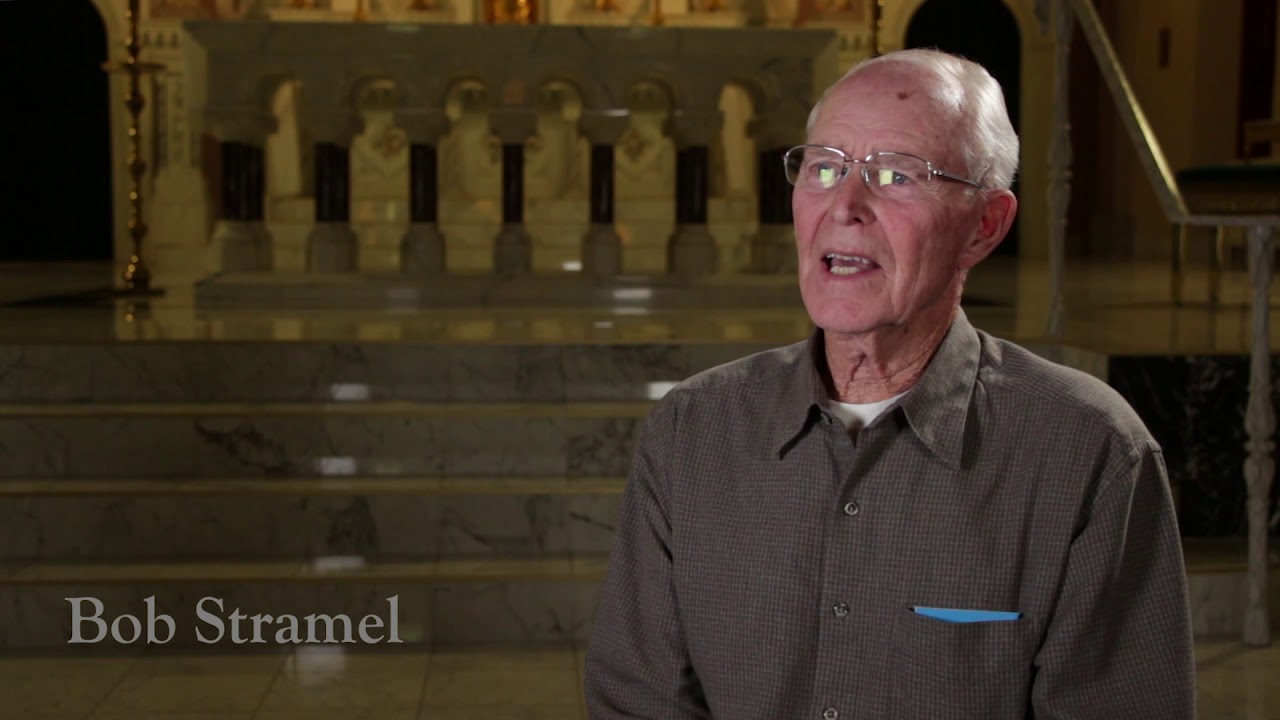
In 2019, Russell Heitmann from Fort Hays State University interviewed several St. Fidelis parishioners and created a 14-minute video of them sharing their knowledge of the history of The Basilica of St. Fidelis.
Featured in the video are Cora Schulte, Ivan and Verda Werner, Bob and Phyllis Stramel,
Det Younger, and Fr. Gilmary Tallman.
Known as "The Cathedral of the Plains," the Basilica of St. Fidelis in Victoria, KS is a historic structure that towers over the rolling fields of western Kansas. In addition to its stone and marble, the presence of family holds everything together. Watch and learn of the people who have made and continue to make St. Fidelis such a special place.